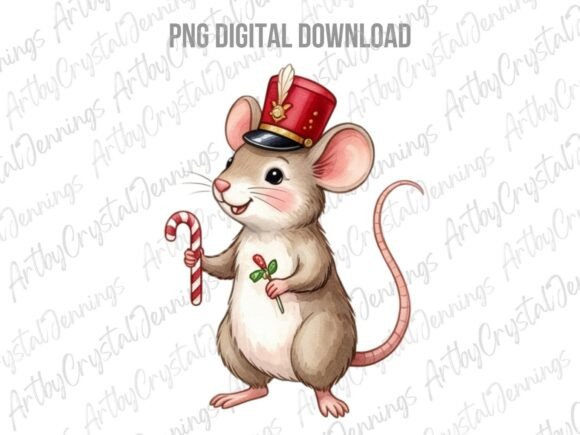
Christmas Holiday Mouse with Candy Cane
As a designer who spends half her life staring at stitch charts and the other half troubleshooting tension issues on the sewing machine, I don’t just look at an embroidery file; I evaluate its potential. When I pulled up Christmas Holiday Mouse with Candy Cane, my first thought wasn’t about the holiday cheer—it was about production viability. Would this translate well to a mass-produced tote bag? Would it hold up after twenty washes in a customer’s laundry room? Or would it become a tangled mess of thread on a stretchy cotton blend?
This review is for the makers, the Etsy sellers, and the boutique owners who need to know if this machine embroidery design is worth adding to your digital library or using for a custom client order. Let’s break down how Christmas Holiday Mouse with Candy Cane performs in real-world scenarios.
First Impressions and Visual Personality
The immediate appeal of Christmas Holiday Mouse with Candy Cane lies in its balance between whimsy and clarity. In the world of holiday embroidery, there is a fine line between "charming" and "cluttered." This design avoids the clutter trap. The silhouette of the mouse is distinct, and the inclusion of the candy cane provides a strong vertical anchor that works exceptionally well for centered placements.
Mood-wise, it strikes a note of cozy nostalgia. It isn’t overly cute to the point of being childish, which makes it versatile. It feels appropriate for a nursery wall hanging but also sophisticated enough for a high-end apron. For an Illustrations category asset, it brings a narrative quality that static clip art often lacks. You can almost hear the jingle bells. This emotional connection is what drives sales in handmade products. Customers aren’t just buying a mouse; they are buying a feeling of festive warmth.
Real-World Application: Where Does It Shine?
I’ve tested various designs across different mediums, and Christmas Holiday Mouse with Candy Cane finds its sweet spot in specific product categories. Here is where I see the highest ROI (Return on Investment) for this file:
- Custom Apparel and Sweatshirts: This design scales beautifully on crewneck sweatshirts. The candy cane element adds height, preventing the design from looking too wide or squashed on a standard chest placement. It pairs wonderfully with neutral tones like cream, heather gray, or deep burgundy.
- Baby Embroidery Items: Because the character is soft and non-threatening, it is perfect for baby onesies, burp cloths, and blanket borders. The visual weight is light enough for delicate fabrics without overwhelming the garment.
- Kitchen Textiles: Tea towels and kitchen aprons are staple items for craft fairs. The candy cane motif naturally aligns with the culinary theme, making it a logical choice for a handmade product sold during the holiday season.
- Holiday Gifts and Personalized Products: Imagine a monogrammed cookie jar or a personalized gift tag attached to a wrapped present. This design serves as a charming accent that elevates the perceived value of a simple gift.
For the Etsy seller or small shop product owner, versatility is key. If you can use one file for a hat, a towel, and a shirt, your inventory management becomes much easier. Christmas Holiday Mouse with Candy Cane offers that flexibility.
Technical Performance and Stitching Clarity
Let’s talk about the nuts and bolts. How does it actually stitch out? The success of any embroidery project depends heavily on stitch density and detail resolution.
The design appears to utilize a mix of fill stitches for the body and satin stitches for outlines and details. This is generally a safe and durable combination. However, the devil is in the details. The eyes and the texture of the candy cane stripes require clear definition. If the stitch density is too low, the mouse might look washed out. If it is too high, the fabric may pucker, especially on lighter materials.
When evaluating this as a digital embroidery file, I always check the small corners. Does the tail have enough definition? Is the curve of the candy cane smooth? From a design judgment perspective, the layout seems optimized to avoid excessive jumping between sections, which reduces thread waste and stabilizer usage. This efficiency matters when you are running multiple orders.
Where to Exercise Caution
No design is perfect for every surface. There are specific situations where Christmas Holiday Mouse with Candy Cane might struggle, and knowing these limits will save you from frustrated customers.
- Small Hoop Sizes: If you attempt to digitize or embroider this on a very small hoop (under 4x4 inches), you risk losing the finer details. The mouse’s features may merge into a blur. Stick to medium sizes to preserve the character’s personality.
- Textured and Stretchy Fabrics: While it looks great on stable cotton canvas, applying this to a highly textured fabric like chunky knitwear or a stretchy spandex blend can distort the shape. The stabilizer plays a huge role here, but even with proper support, the underlying fabric movement can cause stitching misalignment.
- Dense Stitch Areas: Be mindful of areas where multiple colors meet. If the design has large blocks of solid color, ensure your thread colors provide enough contrast. On dark fabric, a light-colored mouse might get lost unless you use a heavy underlay or a contrasting background patch.
- Curved Surfaces: Embroidering directly onto a curved cap front requires careful stabilization. If the design is too wide, it may not follow the curve of the hat smoothly, leading to puckering at the edges.
Practical Designer Notes for Success
Before you upload this to your store or start stitching for a client, follow these professional guidelines to ensure a premium finished product:
- Test on Scrap Fabric: Always run a test stitch-out on the exact fabric type you plan to use. Check for thread breaks, tension issues, and color accuracy.
- Check Stabilizer Compatibility: Use the correct stabilizer for your fabric weight. A cut-away stabilizer is usually best for garments that will be washed frequently, while tear-away might suffice for single-use items like gift tags.
- Black and White Mockups: Convert your digital preview to black and white. This helps you assess the contrast and readability of the design independent of color choices. If it doesn’t read well in grayscale, it might lack structural clarity.
- Thread Color Contrast: Experiment with thread colors. A classic red and green combo is expected, but trying a metallic gold thread for the candy cane stripes could add a luxurious touch for higher-end boutiques.
- Confirm Licensing: Before selling finished items or distributing this as a design asset, double-check the licensing terms. Ensure you have commercial rights if you intend to sell the physical goods.
Final Verdict
Christmas Holiday Mouse with Candy Cane is a solid addition to any holiday-focused design collection. It balances charm with technical feasibility, making it suitable for a wide range of applications from custom apparel to embroidered patches. Its visual appeal supports strong customer engagement, and its structure allows for reliable production.
For the creative entrepreneur, this design offers a low-risk, high-reward opportunity. It taps into the universal love for holiday characters while providing enough design integrity to stand out in a crowded market. Just remember to respect the fabric limitations and test thoroughly. When executed correctly, this mouse won’t just sit on a shelf; it will bring joy to homes and businesses alike, securing its place as a seasonal favorite.